
When we marvel at the precise autonomous navigation of modern giant vessels, the transparency of their onboard situational awareness, or immerse ourselves in high-speed maritime internet connectivity, few pause to consider the underlying physical foundation that makes it all possible. Behind the glossy screens and intelligent systems lie tens of thousands of data cables that silently transmit the “0″s and “1″s essential for navigation safety and efficiency, all within the harshest electromagnetic environment aboard a ship.
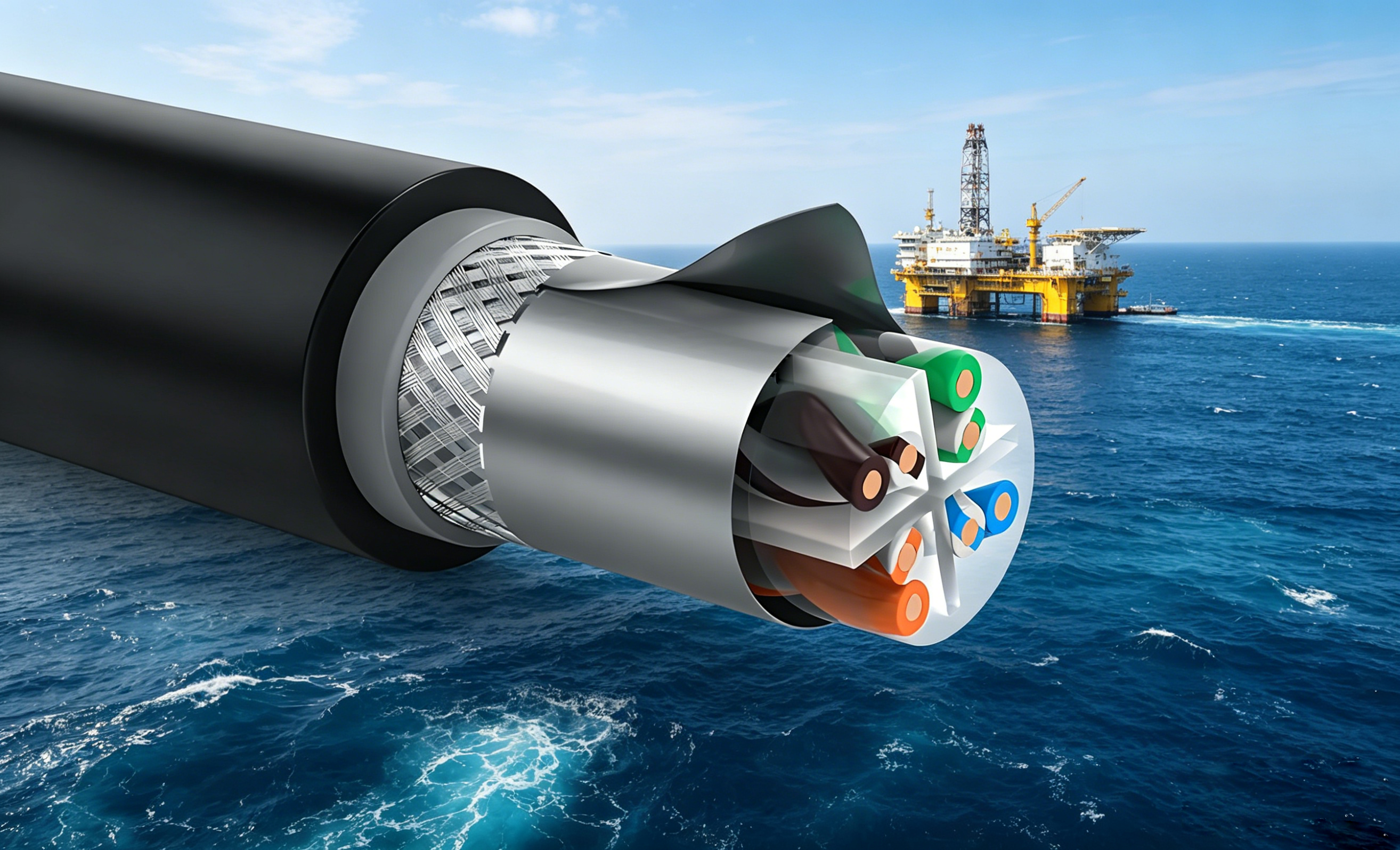
Unlike the relatively clean electromagnetic environment of land-based offices, a ship itself is an extremely complex and powerful source of interference—both an emitter and a receiver. The operation of various radio-frequency (RF) devices generates intense electromagnetic interference (EMI) that affects data cables. In such an environment, without effective countermeasures, signals would be completely drowned in a sea of noise. The core mission of marine Ethernet cables is to ensure high-integrity, high-reliability data transmission under severe electromagnetic conditions. The key to achieving this lies in their shielding construction.
Shielding Types of Marine Ethernet Cables
Common marine Ethernet cable models contain information about transmission rating, construction, materials, etc. For example: CAT5E F/UTP 4*2*24/1 AWG LSZH-SHF1 indicates a Category 5e cable with 24 AWG solid conductors, an overall aluminum foil shield, and a low-smoke zero-halogen flame-retardant polyolefin (LSZH) sheath. Among these, F/UTP represents the shielding type of the cable.
Beyond F/UTP, Ethernet cables come in various other shielding configurations. The common shielding types are as follows:
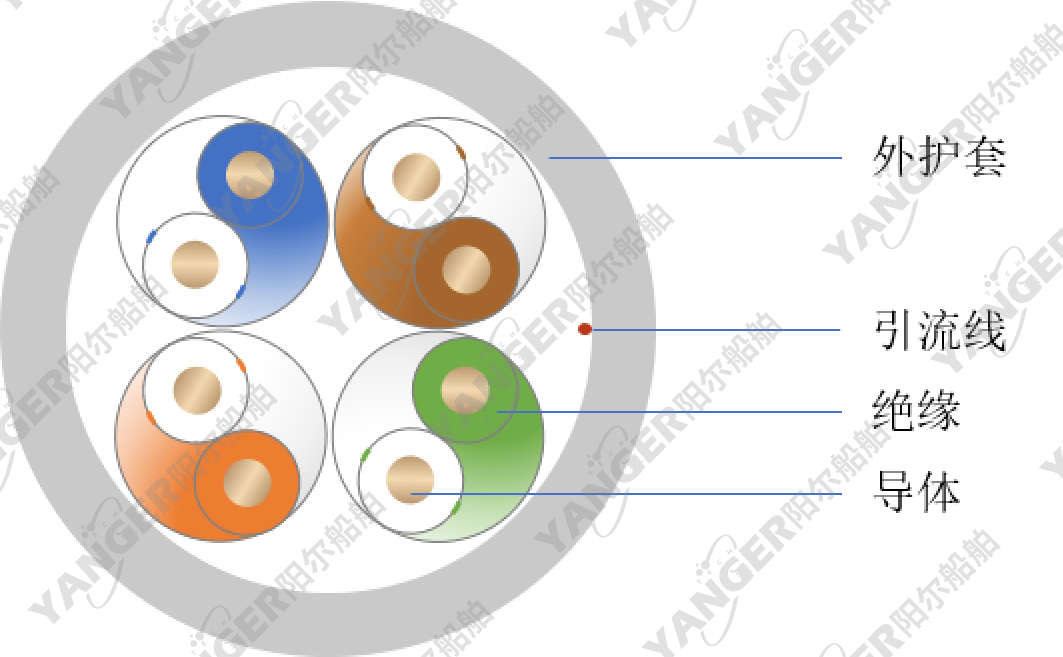
U/UTP (Unshielded/Unshielded Twisted Pair): Unshielded twisted pair. This type has no individual or overall shielding and relies solely on the inherent balance of the twisted pairs to cancel interference. On ships, its use is strictly limited to areas with a relatively clean electromagnetic environment, dryness, and safety. Its core advantages are low cost and light weight. However, in the complex electromagnetic environment of a ship, its disadvantages are significantly amplified, manifesting as unstable network connections, fluctuating speeds, frequent packet loss, and even disconnection.
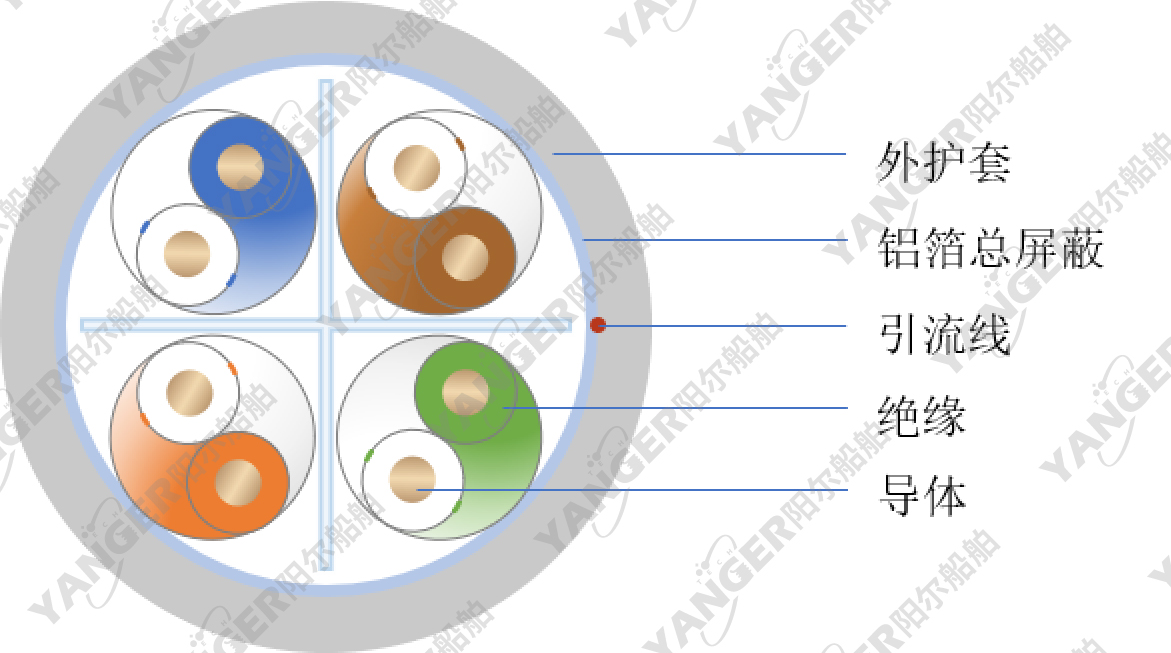
F/UTP (Foiled/Unshielded Twisted Pair): Twisted pairs with an overall aluminum foil shield. This construction wraps a layer of aluminum foil (aluminum-plastic composite tape) around the four twisted pairs. The aluminum foil shield effectively blocks radiated high-frequency electromagnetic field interference. Suitable for general industrial environments, it can be used for shipboard LAN backbones, surveillance systems, etc. Its advantages are high cost-effectiveness and moderate shielding performance, making it an economical and effective solution against environmental and radiated EMI. It has become the mainstream choice for marine applications.
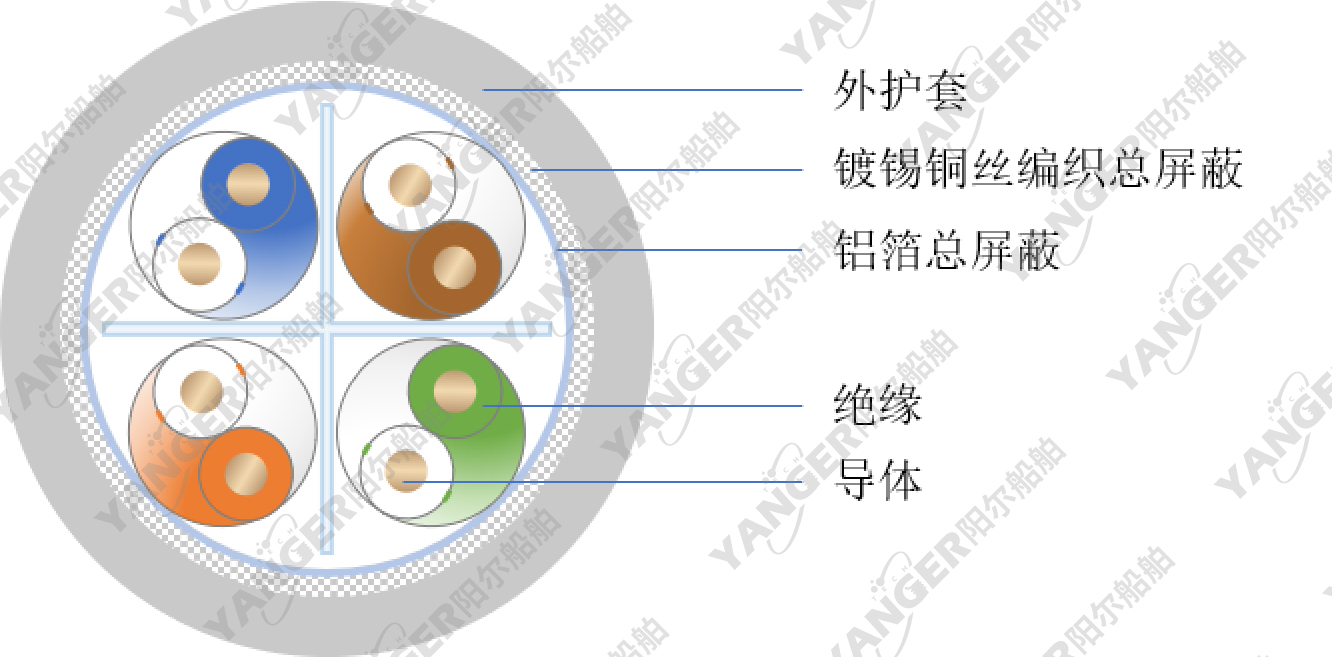
SF/UTP (Screened+Foiled/Unshielded Twisted Pair): Twisted pairs with an overall shield consisting of aluminum foil plus tinned copper braid. The dual overall shielding structure provides excellent resistance to EMI and radio-frequency interference (RFI). In the complex electromagnetic environment of a ship, its reliability is extremely high and its performance is comprehensive. The tinned copper braid not only offers excellent shielding against low-frequency magnetic field interference but also adds extra tensile strength, as well as some resistance to crushing and rodent bites.
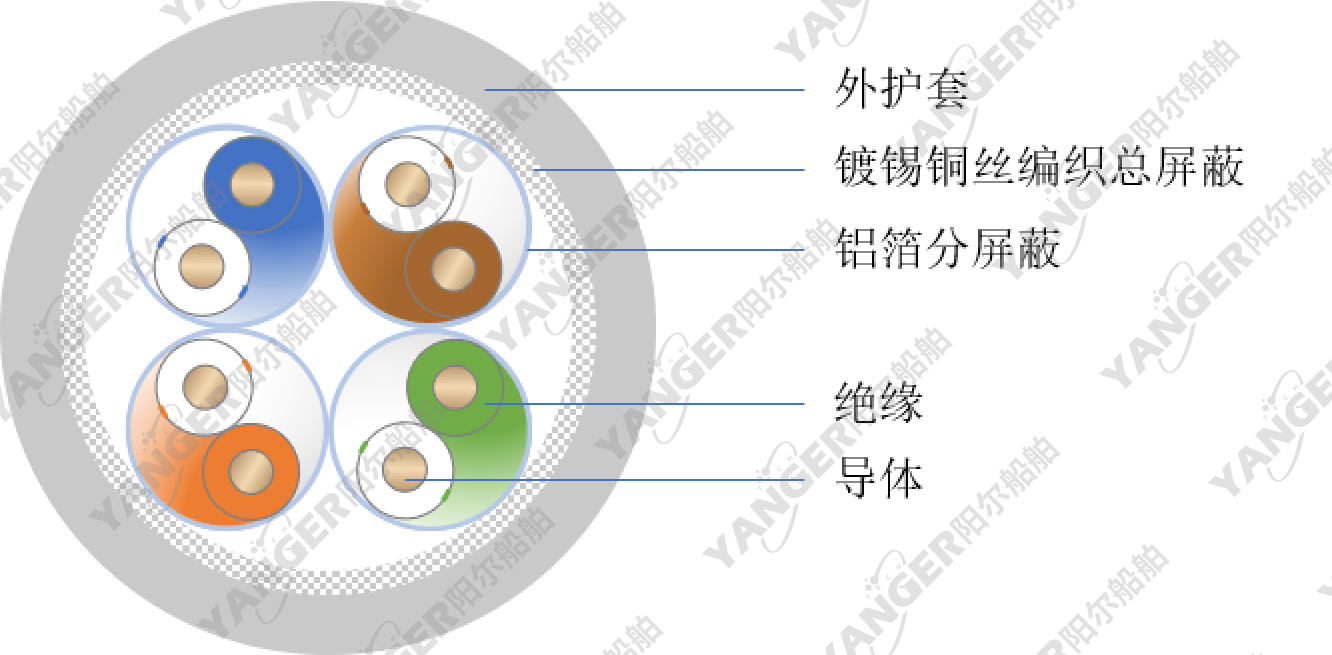
S/FTP (Screened/Foiled Twisted Pair): Twisted pairs with individual shielding (foil) around each pair and an overall tinned copper braid shield. In this construction, each twisted pair has its own aluminum foil shield, and the entire cable is then covered by an overall tinned copper braid. This “individual + overall” shielding structure provides dual protection—eliminating crosstalk between pairs while effectively isolating external EMI. It represents the current “top-tier” shielding configuration for Ethernet cables. In marine Ethernet cables, S/FTP offers the highest shielding effectiveness (>100 dB) and full-spectrum interference suppression, making it applicable to virtually any shipboard communication area.
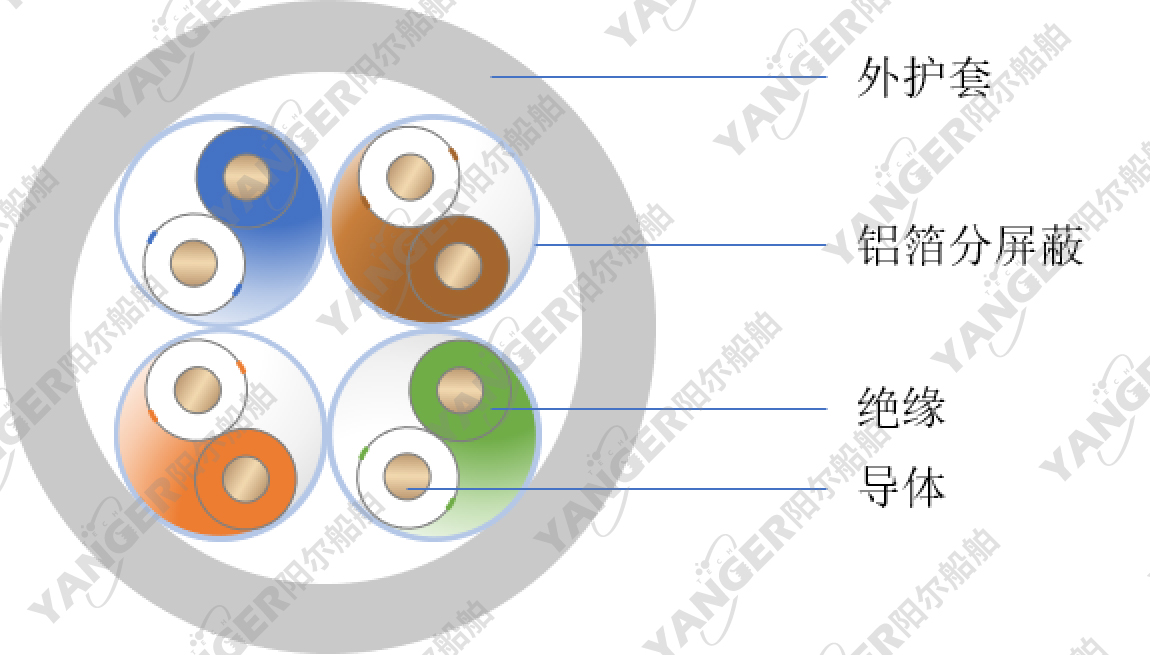
U/FTP (Unshielded/Foiled Twisted Pair): Twisted pairs with individual aluminum foil shielding per pair but no overall shield. Its core design goal is to address internal crosstalk between pairs rather than external interference. Accordingly, its application scenarios are quite limited and specific, mostly confined to standalone devices or equipment rooms with a clean external electromagnetic environment, such as near switches or routers. However, in the selection of marine data cables, the principle of “overall shielding first” is often followed, leaving U/FTP in an awkward and not-recommended position.
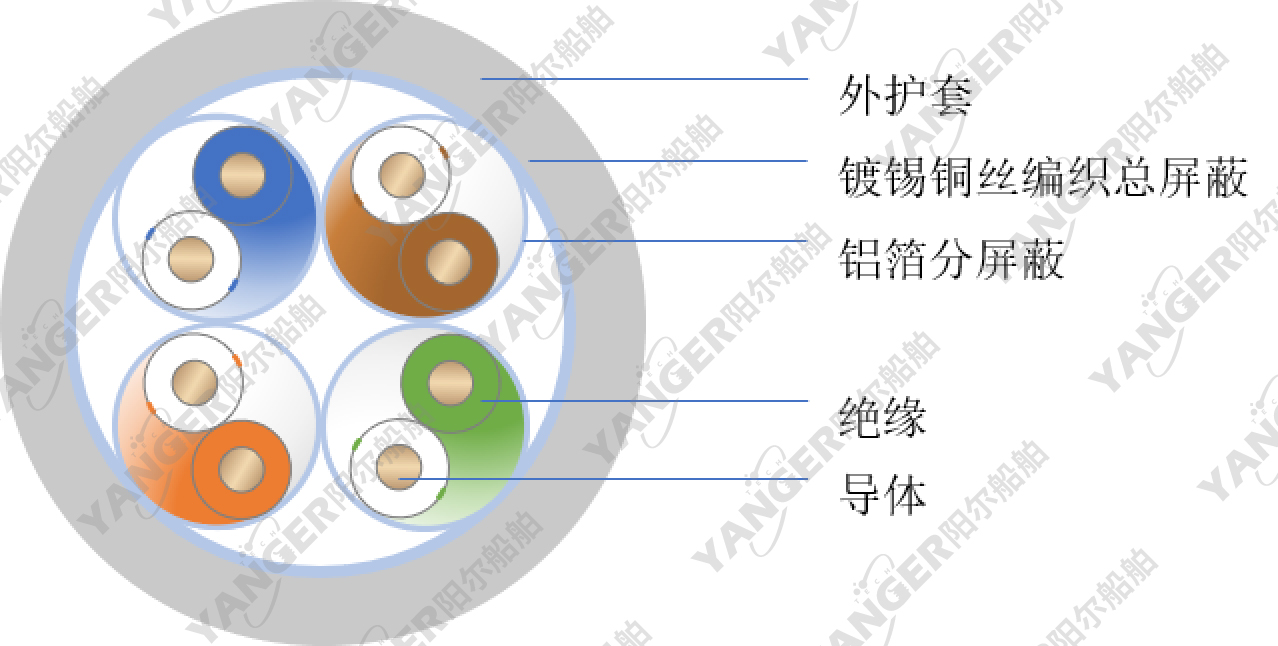
F/FTP (Foiled/Foiled Twisted Pair): Twisted pairs with both individual shielding (foil) and an overall aluminum foil shield. This construction is a combination of U/FTP and F/UTP, representing the “ultimate form” of a pure-foil shielding solution. However, F/FTP has virtually no practical application cases on the vast majority of existing and under-construction merchant or civilian vessels. It remains more of a “conceptual type” in cable design theory. For marine applications, its weakness in rejecting low-frequency magnetic field interference is amplified, and both SF/UTP and S/FTP serve as excellent alternatives.

The selection of marine Ethernet cables is a rigorous exercise in “matching.” From unshielded designs to the current proliferation of various shielding types, different structural combinations bring different shielding performance enhancements, such as low-/high-frequency EMI rejection, crosstalk suppression, etc. In practice, there is no single solution for marine Ethernet cable selection. It requires comprehensive consideration of cost, performance, application environment, installation constraints, and more. For shipboard applications, particular emphasis must be placed on reliability, safety, and environmental adaptability. Following the principles of “check certifications, assess the environment, choose shielding, determine specifications” will help build a stable, efficient, and future-ready “digital nervous system” for the vessel.
Post time: May-29-2026